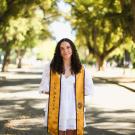
Dulles Hanula and Nico Naylor, recent graduates of the Environmental Policy and Management program, partnered with the California Department of Conservation for their practicum to create a statewide database of county farmland protection policies. Their project analyzed agricultural mitigation ordinances, developed GIS maps to visualize policy trends, and provided recommendations to strengthen farmland conservation across California. Their work gives the Department of Conservation a centralized resource to better understand and protect agricultural land from development.
Shivam’s Practicum at SacBreathe was to assist with launching SB 1383 compliance at Schools in El Dorado County, which classify as a tier 2 edible food waste generator. He also helped long-term resilience towards organics recycling in the region by developing educational materials for students to learn more about the law and launched classroom and schoolwide presentations to educate involved parties about their role in organic waste diversion.
Anna LeRoy is a 2nd year graduate student in the Environmental Policy and Management Program specializing in Sustainable Systems. After completing her B.S in Environmental Studies at CSU Sacramento, Anna was inspired to address climate change through the scope of Extended Producer Responsibility (EPR) legislation. This interest is what led her to working with the National Stewardship Action Council.
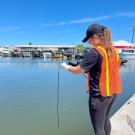
Morgen is a second year in the UC Davis Environmental Policy and Management Graduate Program, with plans to graduate in June 2025. Morgen is now pursuing dual specializations in Water and Marine Resource Management, where she hopes to apply her knowledge of the law, experience in project management, and research and analysis to policy and advocacy in this next phase of her career.
When I began my Environmental Policy & Management (EPM) practicum, I expected to focus on forest management policies and economic modeling. What I didn’t expect was how much this project would reshape my understanding of research, policy, and the interconnected challenges of wildfire resilience, economic justice, and rural development.
Joel Chima is a second-year masters student in the Environmental Policy and Management program, specializing in sustainable agriculture and environmental data science.
Helen completed her Practicum with the California Department of Conservation working closely with the Regional Forest and Fire Capacity team over the summer.
My name is Madison Pelland, and I am currently a student in the Graduate Program of Environmental Policy and Management at UC Davis and plan to graduate June 2025. After completing my undergraduate degree in Environmental Science, Technology, and Policy at CSU Monterey Bay, I felt like I gained a general overview of environmental issues and wanted to dive into a more specialized academic setting. I began to uncover my love for planning and conservation through internships and volunteer opportunities.
Over the summer, Morgan worked as a Graduate Student Researcher with Green Schoolyards America focused on identifying barriers and opportunities for establishing schoolyard forests in Nevada.
For Annika's Practicum, she worked with WSP USA's Climate, Resilience and Sustainability team and the Federal Highway Administration to research vulnerability of Tribal Nation transportation networks to climate change impacts.