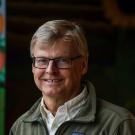
We are very excited to welcome Dr. David Bunn as the new Director of the Environmental Policy and Management program. Since 2015, Bunn served as Director of the California Department of Conservation, managing a staff of over 600 scientists and professionals to promote the judicious use and conservation of energy, land and mineral resources.
Amanda graduated from the program in June 2019. During her graduate career, she served as the inaugural Vice President of the Association of Environmental Professional, Davis Chapter and the Co-President of the EPM student social committee. Throughout her studies, Amanda focused on water policy, environmental law, and climate change – both as a student and as a teaching assistant.
In September 2019, the EPM program welcomed its newest cohort of 20 students with an orientation held at the Barn. We look forward to working with these students and seeing all they accomplish over the next academic year!
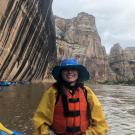
Born and raised in the southern San Joaquin Valley, Danielle spent a majority of her free time in Sequoia and Kings Canyon National Parks where she revered the studies of John Muir and developed a passion for the outdoors. After receiving her B.S. in Biology, Danielle acquired a range of experience from multiple facets of the environmental field.
Lindsay was born and raised in Sacramento. She earned a BS in Civil Engineering at Cal Poly SLO and worked in the Bay Area before returning to school. She is passionate about all things water resources related. She plans to use her technical and policy experience to craft sustainable solutions for...
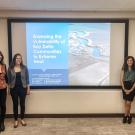
Over the last six months, three groups of EPM students have been diligently working with external partners to complete their Policy Clinic projects. At the beginning of June, each group presented their projects to UC Davis faculty, staff & students as well as their project partners.
Last night, EPM students Amanda DeMarco and Emily Zakowski attended "Wine, Wildfire & Climate Change," a lecture in a series presented by the Robert Mondavi Institute and UC Davis Library on food and wine.
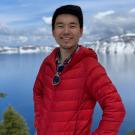
Bilegt was born in Japan but grew up in San Francisco, CA. He earned his BS in Environmental Science and Management at UC Davis and decided to stay at UC Davis to finish his Masters.