


More than Research: Environmental Justice in Practice
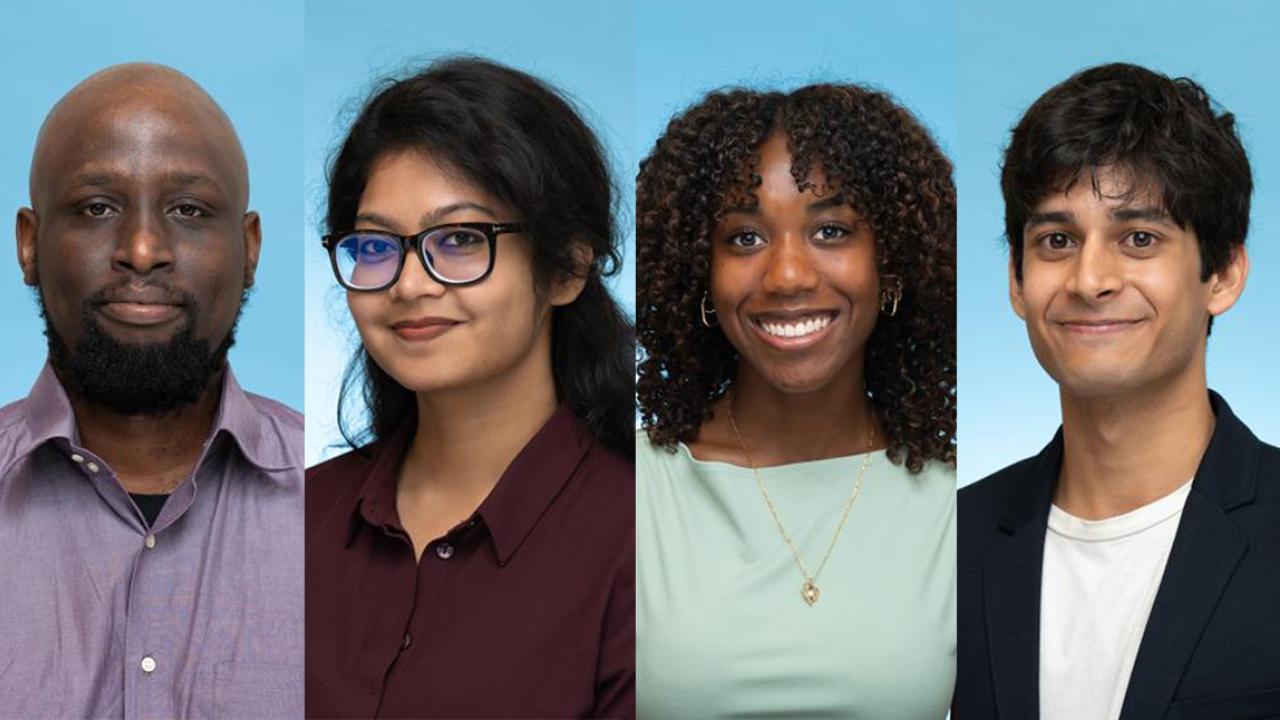
In the summer of 2025, four EPM graduate students put what they’ve learned in the classroom into practice — collaborating with community-based organizations to produce research, policy briefs, and other useful deliverables that could move the needle on some of the most persistent inequities in transportation planning. Their experiences reveal what environmental justice work looks like up close, and why it matters.
About the apprenticeship program
The Environmental Justice Apprenticeship Program was established in 2023 to provide graduate students in the Environmental Policy and Management (EPM) program opportunities to work on environmental justice focused projects in collaboration with community-based organizations. The goal for this program is to provide students with leadership opportunities working on issues affecting frontline communities and to build capacity and help advance an organization’s mission.
The funding for the Environmental Justice Apprenticeship Program is provided by the UC Davis Institute of the Environment. To advance research excellence in applied environmental and climate research, the Institute partners with the Graduate Program of Environmental Policy & Management to train the next generation of environmental practitioners and leaders (Institute of the Environment, 2025).
Dr. Sarah McCullough, Associate Director of the Feminist Research Institute (FRI) partnered with EPM to facilitate projects this year as part of the Environmental Justice Leaders program. The Environmental Justice Leaders program brings leaders working in environmental justice into collaboration with the UC Davis research community, managed by FRI, Institute for Transportation Studies and the Energy Efficiency Institute.
Abel Kebasso with the Niles Foundation
I initially began this project thinking: here was an opportunity for me to observe how a community-based organization (CBO) carries out its work – a ground-level perspective. I was also excited by the prospect of working and doing research within the intersection of environmental justice and transportation mobility. What I quickly realized though was that community-based organizations had a truly gargantuan task. It wasn’t enough to have good intentions and the actionable insights and capacity to carry them out, it was also increasingly necessary that CBOs working in disadvantaged communities be savvy political actors to navigate the often-fraught landscape where these communities are situated.
The project, Empowering Frontline Communities through Electric Mobility, involved my work with The Niles Foundation, a Los Angeles–based nonprofit, as a Graduate Student Researcher in partnership with the Feminist Research Institute here at UC Davis. In this role, I conducted research and analyzed community survey data to produce a literature review, a comprehensive survey report, a storyboard for the organization’s project film, and a final policy brief. The survey, conducted by the organization, provided insights into transportation patterns and barriers; electric vehicle adoption perceptions; and greenhouse gas emissions and air pollution perceptions. The findings and recommendations I drafted from the survey data will help the organization lobby legislators and other organizations, and to inform a microtransit initiative that the organization plans to roll out in the near future.
Council District 15, where The Niles Foundation operates, includes historically disenfranchised neighborhoods and cities such as Watts and Compton, and extends south to Wilmington, San Pedro, and the Port of Los Angeles. During my visit and tour of the area with representatives from the organization, I could see the challenges and disparities firsthand – transit deserts, limited visibility of electric vehicle charging stations, and fewer green spaces in disadvantaged communities, in stark contrast to the conditions in more affluent areas just a 20-minute drive away. It became clear that the most disadvantaged communities also lacked representation or experienced political isolation as was evident in the district where 8 of the 11 council members who’ve represented the district have come from San Pedro.
Working on this project reshaped how I understand community-based work. What I once saw as a matter of research and outreach, organizational capacity and intentionality, I now see additionally as an act of endurance and strategy – on the part of communities and the organizations that work within them. This has deepened my respect for those doing this work and their capacity to amplify the voices of those easily left out of the future they’re helping to build.
Carlin Coleman with Biking While Black (BWB)
I’m a second-year Environmental Policy and Management student at UC Davis and am specializing in Energy and Transportation Planning and City and Regional Planning. I earned my bachelor’s degree in Environmental Engineering from UC Merced, and currently work as an environmental engineer at Jacobs Engineering Group. My work and education have given me a strong technical environmental foundation through projects such as groundwater testing, solid waste management planning, and environmental compliance. As I’ve continued in my career, I’ve become more interested in how people are involved in environmental systems, as well as how planning decisions can be utilized to create more equitable and inclusive spaces. My career goal is to transition into environmental or transportation planning, where I can take my technical background and apply it to policy and design that’s centered on community well-being.
This goal came to life through my practicum with Biking While Black (BWB). BWB is a mobility justice initiative in Los Angeles, CA, and is led by advocate Yolanda Davis-Overstreet. The initiative uses film, storytelling, and community engagement to highlight the systemic inequities, like racialized policing and disinvestment, that impact Black and Brown bicyclists. Mobility justice is about who gets to feel safe and seen in public spaces. My role was to take the stories being told through Biking While Black and transform them into deliverables that can be used by advocates, planners, and policymakers to enact change in transportation systems. I developed a comprehensive report and policy brief that incorporates academic research with qualitative community experiences. My findings highlight storytelling as an essential form of data and that lived experience is necessary to guide transportation planning. My deliverables identify five major frameworks for improving mobility justice, including integrating narratives as data, ensuring institutional accountability and collaboration, and securing sustainable and reliable funding pathways. Overall, I found that infrastructure alone can’t create equity. Real safety and accessibility are the result of trust, representation, and shared power between communities and institutions.
For me, the most powerful moment of my practicum came when I attended a BWB film viewing community meeting in Los Angeles to discuss mobility justice, in collaboration with the Anti-Racism, Diversity, and Inclusion (ARDI) Initiative Mobility Justice series. This meeting was their most popular to date and the energy and interest in the room was palpable. As the film played, you could see viewers react in real time to both the injustices depicted and the moments of joy and freedom found in cycling. After listening to the following panel, community members had the opportunity to share experiences and ask questions. This experience reminded me of why this kind of work matters. Seeing the community and organizations come together was deeply inspiring and truly solidified the power of storytelling, not just for awareness, but also for real change.
Dewansh Matharoo with Mobility Unbound
Mobility Unbound, the organization I worked with through the EJ fellowship, is a network of mobility justice practitioners and organizations who have been invited to strategize and plan mobility justice advocacy together while being a community of support for each other. The creation of this network is led by Adonia Lugo, Naomi Doener, and their colleagues at Equivolve and Policy Link. As someone specializing in environmental justice, this practicum was an excellent opportunity for me to immerse myself in environmental justice grassroots practice. Even though my primary areas of research and specialisation are food justice and food access, I was grateful to be selected to be an EJ fellow so I could apply what I had learnt in my domain of expertise in an unfamiliar landscape while also learning new ways of engaging, thinking, and organizing from experts in their fields.
Mobility justice is a concept rooted in recognizing and dismantling systems of inequity that perpetuate racism and classism, it seeks solutions that do not rely on the police state, and invites people to center the voices of the vulnerable to make systems that are equitable and transformative for everyone. These ideas are challenging to present to policymakers with limited time, and who are unfortunately more compelled by data and figures. One of the most interesting aspects of my work over the summer was understanding what mobility justice meant, and how it could be presented and spoken about in different contexts. I researched cases of urban development and transportation policy across the United States that exemplified mobility justice and fit one or more parameters of the concept. I also developed a policy brief that supported the creation of city-wide mobility action plans that employ mobility justice frameworks to reevaluate mobility and create community-led transportation and mobility plans for cities.
This practicum reminded me that thoughtful environmental justice practice involves enormous amounts of grassroots organizing and critical thought. Through many planning meetings and check-ins with Adonia and Naomi, I learnt that progress is not just creating something to show for your time and energy, but creating something with vision, thought, the communities you are working with, because ultimately, if environmental justice work is not collaborative, does not meaningfully address systemic inequities, and does not challenge the status quo, change will be hard to both imagine and see actualized.
Subah Tarannum with America Walks
I’m a second-year graduate student in the Environmental Policy and Management Program at UC Davis, specializing in Environmental Justice. As a geographer with an urban planning background, I have long been drawn to questions of equity and representation in how cities are designed. Reflecting on my own experience as a non-driver and on my work presenting how marginalized communities face intersectional barriers to accessing public transportation, I became interested in exploring how transportation planning can better center the lived experiences of people affected by historical injustices and inequalities. My goal is to continue exploring how community voices can transform the way we think and talk about sustainability and equity in the planning process through evidence-based policy and practice.
For my practicum, I partnered with America Walks, a national nonprofit focused on creating walkable, transit-accessible, and equitable communities. The project, “Incentivizing Low-Emission Transportation Alternatives,” examined how transit incentives e.g., tax credits, fare-free initiatives, and other programs can reduce car dependency and promote low-emission transportation alternatives. Through extensive literature reviews and analyses of national and international case studies, I explored how such programs are designed and implemented, and how non-drivers experience mobility in different contexts. This set the foundation for interviews with non-drivers, focusing on people facing systemic barriers to public transit, such as rural residents and individuals with disabilities. I analyzed how factors such as housing location, income, disability, and access to essential services shape daily mobility experiences by conducting thematic analysis and data anonymization of interview findings to ethically capture participants’ perspectives. The project’s findings are being incorporated into an upcoming story map and user-generated content hub, which will highlight non-driver narratives to guide future advocacy and policy design. By combining community storytelling with research, I hope this project contributes to a broader shift toward inclusive, evidence-based policymaking that prioritizes the voices of those most affected by transportation inequities.
As a non-driver myself, this practicum reminded me that transportation stories matter and that representation matters too. Through the non-driver interviews, I learned how the freedom to move shapes every part of a person’s life. When policies like transit tax credits and free fares are introduced, they do more than reduce financial barriers. For those who cannot afford car ownership, such policies can greatly expand their ability to participate more fully in society, whether by attending work, accessing opportunities, engaging in social activities, or accessing healthcare. Every story I heard stayed with me. People spoke about how one change in a bus schedule could shift their entire day, how long walks or unreliable routes forced them to rearrange their time, and how small planning decisions can carry huge consequences for real lives. Those made me see that planning, beyond its technical side, is deeply human, and that, for planning to be better, it has to be inclusive. We need to hear more stories, understand different needs, and build systems that truly serve people.
Across four very different projects, a common thread emerged: the people most affected by transportation inequities have the clearest vision for what change should look like — and have too often been left out of the rooms where those decisions get made. These apprenticeships were not just professional development. They were an encounter with the endurance, strategy, and creativity of communities and organizations working to be heard. The students who undertook this work left with a deepened commitment to ensuring that environmental and transportation planning is not done to communities, but with them.